
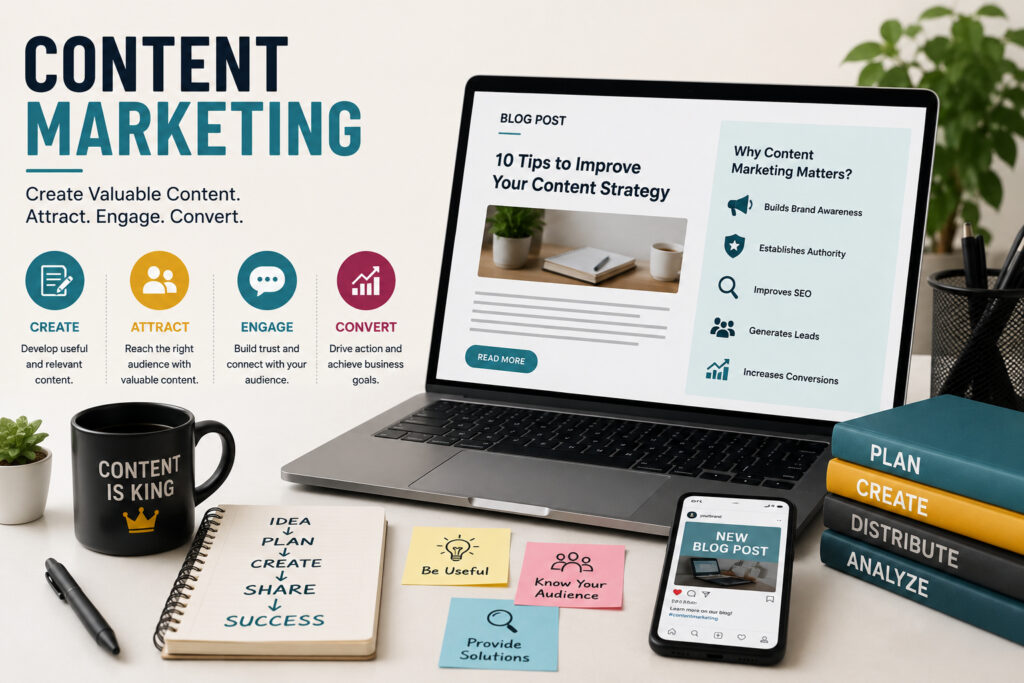

Did you know the average person sees over 4,000 ads daily? In today’s busy digital world, standing out isn’t just about making noise, it’s about strategic communication that truly connects with people. Content marketing helps brands achieve this by creating valuable, engaging content that builds trust, attracts the right audience, and drives lasting relationships.

Offering valuable information that solves real problems can help you stand out. This builds meaningful connections and loyalty to your brand.
Mastering Content Marketing turns your outreach into something valuable. This guide will show you how to grow your brand and make your message count.
Key Takeaways
- Understand the vital role of strategic communication in modern business.
- Learn to capture attention in a saturated digital environment.
- Focus on providing high-quality information to solve user problems.
- Build lasting brand loyalty through consistent and valuable outreach.
- Drive measurable growth by refining your engagement strategy.
Understanding the Fundamentals of Content Marketing
Content marketing connects your brand’s vision with your customer’s needs. It offers value, not just products. This builds trust and authority that lasts.
Defining the Role of Content Marketing in Modern Business
In today’s digital world, your content represents your company 24/7. It educates, solves problems, and guides decisions.
Good Content Marketing is about being relevant, not just about how much you produce. Delivering quality information makes your brand a leader in your field.
To start strong, remember these key points:
- Consistency: Keep a regular schedule to keep your audience interested.
- Value-First Approach: Focus on what your readers need, not just sales.
- Authenticity: Share your brand’s story to connect with people on a real level.
- Utility: Make sure every piece of content offers a clear benefit or solution.

Why Engagement Matters in the US Market
The U.S. market is very competitive, with many choices available. Meaningful engagement is key for lasting success.
By focusing on interaction, you go beyond just counting page views. You create a community that supports your brand, which is crucial for growth.
Successful Content Marketing in the U.S. means listening to your audience and responding to their feedback. Treating your online presence as a conversation builds loyalty in a fast economy.
Your ability to adjust your strategy based on engagement data will set you apart. Understanding these basics helps you meet your audience’s high expectations.
Defining Your Content Marketing Strategy
Your digital content strategy is the base of all marketing plans. It makes sure every piece of content has a clear goal. This way, your team focuses on what really matters.

Setting Measurable Goals and Objectives of Content Marketing
Good Content Marketing starts with clear goals. You need specific, measurable targets to track your success. Goals like more website visits or more leads help keep your strategy focused.
Use the SMART framework to make your goals better. It makes sure your goals are achievable and have a deadline. Clear metrics help turn vague ideas into real actions.
Aligning Content with Your Brand Identity
Being consistent is key to a strong brand. Every piece of content should show your brand’s values and style. Your audience should see your brand’s unique personality everywhere.
Establishing Your Unique Voice
Your brand voice is how you talk to the world. It should be real and connect with your audience in the U.S. Consistency in tone builds trust and strengthens your bond with readers.
Mapping Content to the Customer Journey
To really make an impact, share the right message at the right time. Map your content to the customer journey to meet their needs at each stage. You can break it down into three main parts:
- Awareness: Educational content that solves initial problems.
- Consideration: Detailed guides that highlight your unique solutions.
- Decision: Case studies and testimonials that build final confidence.
By matching your Content Marketing with these stages, you help potential customers move toward buying. This strategic approach is crucial for success in a competitive online world.
Step One: Identifying Your Target Audience in Content Marketing
You can’t create a winning digital content strategy without knowing who you’re talking to. Success in the American market needs a deep understanding of your audience. By focusing on the right people, your message will hit home.
Creating Detailed Buyer Personas in Content Marketing
A buyer persona is a detailed picture of your ideal customer. It goes beyond basic info like age and location. It includes psychographic details like values and daily challenges. This helps you see who’s reading your content.
Building these profiles helps you understand what drives your audience to buy. Detailed personas let you tailor your content to fit your niche. This personal touch builds trust over time.
Researching Audience Pain Points and Interests
To stay relevant, find out what problems your audience faces daily. Use surveys, interviews, and social media polls for feedback. Knowing these pain points is key to a successful digital content strategy.
Once you know what worries your audience, create content that solves these problems. Focus on topics that answer their biggest questions. This makes your brand a trusted source, not just another seller.
Utilizing Search Intent Data
Search intent shows what users are looking for in search engines. By analyzing this, you can see if they want to learn, compare, or buy. Aligning your content with their intent attracts quality traffic.
Analyzing Competitor Audience Interactions
Study how your competitors interact with their followers on platforms like LinkedIn and Instagram. Look at comments to find unanswered questions. This helps you improve your digital content strategy by filling market gaps with better information.
Step Two: Crafting High-Value Content for Maximum Impact of Content Marketing
Creating impactful content is more than just writing. It’s about having a digital content strategy. You need to turn simple info into valuable assets for your readers. Quality content helps your message shine in a busy online world.
Developing Educational and Informative Formats
Educational content connects your brand with your audience’s needs. Focus on guides, whitepapers, and how-to articles. These pieces show your expertise and offer tangible solutions to problems.
Clear information makes complex topics easier to understand. Use bullet points and numbered lists to organize data. This keeps your audience interested and learning from you.
Incorporating Storytelling Techniques
Storytelling brings your digital content strategy to life. Instead of just listing facts, tell a story that shows the human side of your business. Stories help people see how your products or services fit into their lives.
Building Emotional Connections with Readers
Emotional connections are key to lasting loyalty. Sharing real experiences or customer success stories builds deep trust with your readers. People support brands that share their values and dreams.
Using Visuals to Enhance Readability
Visuals are crucial for keeping readers interested. Use high-quality images, infographics, and charts to explain complex ideas. These elements make your digital content strategy more impactful and memorable.
Step Three: Mastering Effective Content Marketing Distribution Channels
Mastering content distribution is key to success. It’s about getting your work seen by the right people at the right time. This way, you avoid wasting resources on channels that don’t work.
Selecting the Right Platforms for Your Niche in Content Marketing
Not every platform is right for your business. You need to find where your audience hangs out. Then, focus on those places to get the most out of your content distribution.
For example, a B2B software company might do well on LinkedIn. Meanwhile, a lifestyle brand could shine on Instagram or Pinterest. Choose the platforms that give you the best results for your industry.
Implementing Email Marketing Campaigns
Email is a reliable way to keep in touch with your leads. It helps you stay on their minds. By sending personalized content, you build a stronger connection with them.
Sort your email list based on how users interact with your content. This makes your emails feel more relevant. Regular emails can turn casual readers into loyal customers.
Leveraging Paid Promotion for Targeted Reach
Sometimes, you need more than just organic reach. Paid promotion lets you reach new, targeted groups. These are people who might not have found you otherwise.
Use data to target your ads to the right people. This way, your content distribution budget goes to those most likely to be interested. It’s a smart way to spend your money.
Understanding Native Advertising Options
Native advertising is a smooth way to promote your content. It blends in with the rest of the content, so it doesn’t disrupt the user experience.
Using native ads can build trust and engagement. It’s great for users who ignore traditional ads. This approach can really help you connect with your audience.
Step Four: Optimizing Blog Management for Consistent Growth in Content Marketing
Consistent growth doesn’t happen by chance. It comes from careful blog management and planning. Treating your website like a professional publication helps keep your audience engaged.

Creating a Sustainable Editorial Calendar
A solid editorial calendar is the heart of your content plan. It lets you plan topics ahead of time. This keeps your content distribution steady and easy to follow.
Planning ahead avoids the rush of last-minute writing. Consistency is the key to winning over readers and search engines.
Best Practices for On-Page SEO
After planning, make sure your content is technically perfect. On-page SEO boosts your page’s ranking and attracts more relevant visitors.
Optimizing Meta Tags and Headers
Meta tags and headers are crucial for search engines. Include your main keywords in title tags and meta descriptions to get more clicks.
Use H1, H2, and H3 tags for a clear structure. This makes your article easy to scan and helps search engines understand its value.
Internal Linking Strategies for Better Navigation
Internal linking keeps visitors on your site longer. It connects related articles, guiding readers through your content.
Good blog management means checking your links often. A well-linked site enhances user experience and supports your content distribution goals.
Step Five: Leveraging Social Media Marketing to Boost Reach
Building a vibrant community starts with using social media marketing to reach your audience. Your blog management efforts lay the groundwork for your content. Social platforms then amplify your message to more people. This turns passive readers into loyal brand supporters.
Tailoring Content for Specific Platforms
Every social network has its own culture and user expectations. You can’t just post the same thing everywhere. You need to adjust your content to fit each platform’s vibe.
LinkedIn is all about being professional and industry-focused. Instagram loves high-quality visuals and stories. By tailoring your content, you connect with users on a deeper level.
Engaging with Your Community in Real-Time
Engagement is more than just posting content. It’s about being part of the conversation. When you respond quickly, you show your brand cares about people. This builds trust and keeps followers coming back.
Managing Comments and Direct Messages
Comments and direct messages are key for feedback and building relationships. View every interaction as a chance to add value or solve a problem. Keep your blog management practices consistent in these areas, too.
Hosting Interactive Polls and Q&A Sessions
Polls and live Q&A sessions boost engagement. They let followers share their opinions and feel part of your brand’s story. Use these insights to improve your content and meet your community’s needs.
| Platform | Primary Focus | Engagement Style |
|---|---|---|
| Professional Networking | Thought Leadership | |
| Visual Storytelling | Community Interaction | |
| X (Twitter) | Real-time Updates | Conversational Threads |
| Community Building | Group Discussions |
Step Six: Utilizing Content Analytics to Refine Your Approach
Turning numbers into useful insights is key. By using content analytics, you make informed decisions. This ensures your work meets your business goals.
Key Performance Indicators to Track
To see how your audience interacts with your brand, track certain metrics. These metrics show what works and what doesn’t.
- Engagement Rate: Looks at likes, shares, and comments.
- Conversion Rate: Sees how many users take a desired action.
- Click-Through Rate (CTR): Checks if your headlines and calls to action work.
- Bounce Rate: Shows if visitors leave without interacting.
Interpreting Data to Improve Future Campaigns
Getting data is just the start. You need to understand it to improve your social media marketing. Look for trends over time, not just one day.
| Metric | High Performance | Low Performance |
|---|---|---|
| Engagement | High interaction | Passive viewing |
| Traffic | Consistent growth | Stagnant numbers |
| Conversion | Strong ROI | High drop-off |
Adjusting Strategy Based on Engagement Metrics
If certain topics get more interest, focus on that content. If your social media marketing does well but blog posts don’t, add social snippets to your articles. This keeps your audience engaged.
A/B Testing Your Content Elements
A/B testing lets you compare different versions of a single element. You can test headlines, images, or colors. Through content analytics, you can improve your results and stay relevant online.
Conclusion
Improving your digital engagement is a journey that never ends. You now have the tools to match your brand with what your audience wants in the U.S.
Success comes from using these strategies every day. See your outreach as a dynamic system that changes with the market. Use content analytics to adjust when your numbers change.
Data is your guide in the digital world. It helps you improve your messages and get more from your efforts. Regularly checking your analytics makes sure your content has a purpose.
Use these tips to meet your business goals today. Your brand needs a strategy that grows with you. Start using these methods now to stay relevant and connect deeply with your customers.
FAQ
What is the primary purpose of content marketing for American businesses?
In the US, content marketing is key to reaching your audience. It uses quality content to stand out in a crowded market. This helps build loyalty and grow your business.
How do I develop an effective digital content strategy?
To create a strong digital content strategy, start by setting clear goals. Find a unique voice for your brand. Then, tailor your messages to match your customers’ journey stages.
What is the best way to identify and understand my target audience?
To know your audience, make detailed buyer personas. Use tools like Semrush to understand their needs. Also, study how competitors engage with their followers to improve your approach.
How can I ensure my content provides maximum value to readers?
Make your content valuable by using storytelling. This builds emotional connections. Use visuals to make it easy to read and understand.
What roles do content distribution and paid promotion play in my strategy?
Content distribution gets your work seen by the right people. Organic reach is key, but paid ads can help too. Use platforms like LinkedIn to target specific audiences.
Why is consistent blog management vital for long-term growth?
Managing your blog keeps you a leader in your field. Use an editorial calendar and follow SEO best practices. This boosts your visibility and keeps readers interested.
How does social media marketing help in building a community?
Social media marketing lets you tailor your message for each platform. Engage with your audience live. This turns followers into an active community.
How can I use content analytics to improve my future campaigns?
Use analytics to track important metrics like engagement and conversions. Analyze this data to refine your strategy. This leads to better results and higher ROI.