
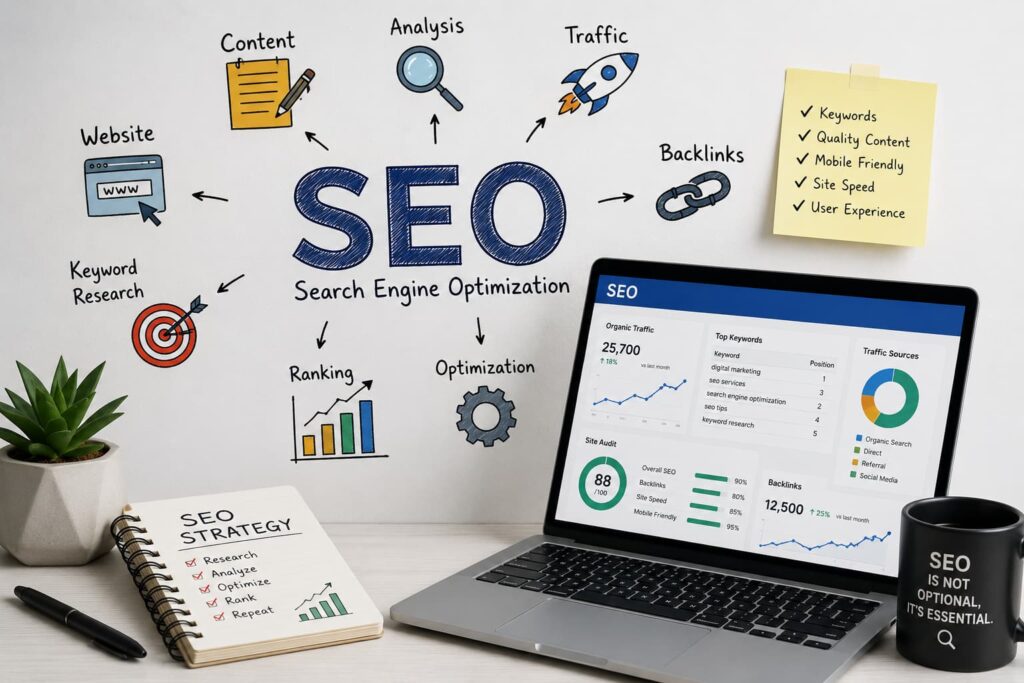

In today’s competitive United States market, success isn’t just about having a great product. You also need to make sure people can find you online. A smart seo strategy is key to grabbing attention and bringing consistent traffic to your site.
A solid digital marketing plan is the base of your brand’s online presence. By optimizing for search engines, you boost your visibility and stand out. This is crucial for any business aiming for lasting growth in today’s world.

Sticking to these strategies helps you beat your rivals and grab more market share. When you focus on your online authority, you pave the way for steady income. In today’s fast-paced world, mastering seo is not just helpful—it’s essential.
Key Takeaways
- Being visible in search results is key to attracting new customers in the United States.
- A strong digital marketing plan is the foundation of your online success.
- Search engine optimization is a lasting way to boost your revenue over time.
- Consistent effort helps your brand outrank competitors in a crowded digital space.
- Focusing on these strategies ensures long-term growth and brand authority.
Laying the Foundation for Your SEO Success
Creating a strong online presence is more than just tweaking tech. It needs a clear plan that links your digital work to your business goals. Good search engine optimization is a planned effort aimed at getting real results.
Defining Your Business Goals and Target Audience
To grow your business, you must know what you want to achieve. Do you want to boost brand awareness, get more leads, or sell more online? Setting these goals helps you track your success.
Finding out who your ideal customers are is also key. You need to know what they need and how they search. When you make your seo strategy fit their needs, your content will really connect and turn visitors into loyal customers.
Setting Realistic Expectations for Search Rankings in SEO
Many new to digital marketing want quick wins, but search rankings take time. Getting to the top of search results often takes months of quality work. Think of it as a long race, not a quick dash.
Keeping a long-term view helps you avoid getting frustrated with quick changes. Stick to making steady improvements and use data to guide your site changes. This patient approach will build your authority and get your business the lasting visibility it needs.
Conducting Comprehensive Keyword Research For SEO
To drive meaningful organic traffic, you need to know what your target market talks about. Good keyword research is key to your online success. It makes sure your content matches what your customers are searching for, appearing when they need you most.
Identifying High-Intent Keywords for Your Niche
Not all search terms are the same. Focus on keywords that show a buyer is ready, like “buy,” “hire,” or “best price.” These terms mean the user is ready to buy, not just looking.
Targeting these keywords can greatly boost your conversion rate. It helps you reach users who are already looking for a solution. This makes your marketing efforts more effective, not just about numbers.

Utilizing Tools Like Google Keyword Planner and SEMrush
Professional tools are vital for finding the right keywords. Google Keyword Planner gives insights into search volume and competition. SEMrush offers deeper insights to help you stand out.
These tools help you sift through many options to find the best ones. You can see how keywords affect your search rankings over time. Regular checks keep your strategy up-to-date in a fast-changing online world.
Analyzing Competitor Keyword Gaps
Identifying what your competitors miss can help you grow. Look at their site structure to find “keyword gaps.” Targeting these gaps can help you grab market share you might have missed.
Focusing on Long-Tail Keywords for Better Conversion
Long-tail keywords might have lower volume, but they offer better returns. They’re easier to rank for and attract more qualified users. These users are more likely to become loyal customers.
| Keyword Type | Search Volume | Intent Level | Conversion Potential |
|---|---|---|---|
| Short-Tail | High | Low | Low |
| Mid-Tail | Medium | Medium | Medium |
| Long-Tail | Low | High | High |
Optimizing Your Website Architecture and Performance In SEO
Creating a top-notch website is more than just a pretty design. It needs a strong technical base. Your website architecture is like a map for search engines to find your content. A clear structure helps search engines index your pages better, which is key for search engine optimization.

Improving Site Speed and Core Web Vitals
Today’s users want fast results, and search engines do too. Making your site faster is crucial for keeping visitors and boosting organic traffic. Focus on Core Web Vitals to measure how well your site loads, interacts, and looks.
To speed up your site, optimize images, use browser caching, and cut down on heavy scripts. These tweaks help your site stay competitive online. A quicker site can also lead to more conversions and better user experience.
Structuring Your URL Hierarchy for Crawlability In SEO
A simple URL structure helps both users and search engines get your page’s purpose. Organize your content into clear categories based on your keyword research. Avoid deep nesting to help crawlers find your key content easily.
Implementing HTTPS for Secure Browsing
Security is essential in today’s seo. HTTPS encrypts data between your server and users, keeping info safe. Search engines prefer secure sites, often ranking them higher than non-secure ones.
Creating an XML Sitemap for Search Engines
An XML sitemap is a guide for search engine bots, showing them your site’s most important pages. By submitting it to search consoles, you help crawlers find new or updated content. This step ensures your search engine optimization efforts are recognized, attracting more organic traffic over time.
Mastering On-Page SEO Techniques
Improving your page elements sends clear signals to search engines about your content’s value. On-page seo is about making your site’s parts better. This ensures both users and algorithms get your message. By focusing on these details, you build a strong base for your search engine optimization efforts.
Crafting Compelling Title Tags and Meta Descriptions In SEO
Your title tag is the first thing users see in search results. It’s like a digital storefront. So, it must be engaging and relevant to your audience. A good title tag encourages clicks, which boosts your organic traffic.
Meta descriptions give a quick summary of your page content. They don’t directly affect rankings but are crucial for your conversion rate. They convince users to visit your site. Keep them short and include a clear call to action.
Optimizing Header Tags for Readability and Relevance for SEO
Header tags, like H1, H2, and H3, organize your content into sections. They help readers scan your page quickly, enhancing the user experience. Search engines also use these tags to understand your page’s structure and main topics.
Make sure your headers have descriptive keywords that match the content below. This helps search engines index your site better. A clear structure supports your website architecture goals.
Using Internal Linking to Boost Page Authority
Internal linking connects your pages, creating a roadmap for users and crawlers. By linking to key content, you spread authority across your site. This helps search engines find new pages and understand your topics’ relationships.
Optimizing Images with Descriptive Alt Text
Images are key for visual engagement but need proper optimization for seo. Always use descriptive alt text that explains the image. This improves accessibility and helps search engines index your images, boosting organic traffic to your site.
Developing a High-Quality Content Strategy for SEO
A good content strategy helps connect what users search for with what your brand offers. By matching your content with a clear content strategy, you become a trusted name in your field. This is key to good digital marketing, making sure every piece of content helps meet your business goals.
Creating Content That Answers User Intent
Success in search rankings starts with focusing on user intent. When someone searches, they’re looking for a solution or answer. Your content should meet these needs directly, offering value that keeps people on your site.
Make guides, tutorials, or answers that solve problems, not just keywords. When you meet the reader’s needs, your seo improves. This builds trust and makes people come back for more.
Maintaining Consistency in Your Publishing Schedule in SEO
Being consistent keeps your audience engaged and search engines interested. A regular schedule shows crawlers your site is active and offers new info. Reliability is crucial for a loyal following that looks forward to your next post.
- Set a realistic editorial calendar your team can keep up with.
- Focus on quality over quantity to ensure every post adds value.
- Use automation tools to manage your workflow and track deadlines.
Repurposing Content Across Different Formats
You don’t always need to create new content to stay strong. Repurposing existing content reaches new audiences and reinforces your message. For example, turn a detailed blog post into social media updates or a video script.
Updating Legacy Content to Maintain Freshness
Your older posts are still valuable if you manage them right. Regularly reviewing and updating legacy content is crucial for on-page seo. Refreshing stats, adding new insights, or improving readability shows search engines your site is current and relevant.
This keeps your site fresh and prevents it from becoming outdated. Regular maintenance ensures your old content keeps working for your business.
Building Authority Through Strategic Link Building For SEO
Strategic link building is key for digital growth. When other sites link to yours, search engines see you as trustworthy. This boosts your ranking for important terms.
Earning Backlinks from Reputable Industry Sources
Quality links are more valuable than many. Aim for links from respected sites in your field. These links show search engines you’re credible.
Reach out to industry publications or professional groups that match your business. Share unique data or insights to get links naturally. This keeps your growth real and lasting.

Executing Effective Guest Posting Campaigns
Guest posting is powerful if you focus on user intent. Write helpful articles for other blogs to reach new people and show your expertise. Make sure your content strategy targets where your skills are most needed.
When guest posting, aim to solve problems for readers. A well-written post that answers questions will attract clicks. This boosts your reputation and search visibility.
Avoiding Black-Hat Link Building Practices
Stay away from quick fixes that use tricks. Buying links, joining link farms, or using automated tools can harm your site. These actions can lead to penalties that take time to recover from.
- Never purchase links from low-quality websites.
- Avoid excessive link exchanges that lack relevance.
- Focus on earning links through high-quality, shareable content.
Monitoring Your Backlink Profile for Toxic Links
Check your backlink profile often to keep your site’s reputation strong. Sometimes, spammy sites link to you without your permission. Use tools like Google Search Console to find these links.
If you find bad links, use the disavow tool to ignore them. Proactive monitoring keeps your site safe. A clean profile protects your progress and builds lasting authority.
Leveraging Local SEO for United States Markets
Local search optimization connects your physical store with online shoppers. For businesses in the United States, local seo is crucial for attracting nearby customers. It makes sure your brand is seen by those who might visit you.
Optimizing Your Google Business Profile
Your Google Business Profile is your online store. To reach more people, make sure your business name, address, and phone number are correct. Consistency is key when updating these details to avoid confusion.
Use high-quality images and specific service categories to make your profile stand out. Regular updates keep your listing fresh and engaging. This shows search engines your business is active and relevant to locals.
Managing Online Reviews and Local Citations
Customer feedback is powerful and influences buying decisions. Encourage happy customers to leave reviews, as they impact your visibility. Responding to all feedback shows you value customer satisfaction and integrity.
“Trust is the currency of the modern digital marketplace, and local reviews are the primary way businesses earn that trust from their neighbors.”
Building local citations is key, not just for link building. It’s a foundational part of your seo strategy. The table below shows what drives success in your local market.
| Factor | Primary Benefit | Action Required |
|---|---|---|
| Google Profile | Map Pack Visibility | Update NAP Data |
| Customer Reviews | Brand Trust | Request Feedback |
| Local Citations | Domain Authority | Audit Directories |
| Content Strategy | Local Relevance | Write Local News |
Implementing Advanced SEO Analytics and Tracking
Data is key to a successful digital marketing campaign. Without it, you’re flying blind. Advanced tracking lets you make informed decisions that boost your business.
By watching specific metrics, you can improve your seo efforts. This ensures your resources are used wisely. It also helps you stay ahead of competitors.
Setting Up Google Analytics 4 for Performance Tracking
Google Analytics 4 is top for understanding website visitors. It shows how visitors find your site and what they do there. Start by following these steps:
- Create a property for your domain.
- Install the tracking code in your website header.
- Configure custom events for key conversions like form submissions.
- Link your account to other tools for a unified view.
After setting it up, track your local seo campaigns by location. This ensures your marketing budget is used where it matters most.
Using Google Search Console to Identify Technical Issues
Analytics tools show what users do. Google Search Console shows how search engines see your site. It’s vital for site health and finding technical barriers to seo rankings.
Use it to check crawl errors, indexation status, and mobile usability. Fixing these issues quickly stops drops in organic traffic. Here’s what to monitor:
| Metric | Purpose | Action Required |
|---|---|---|
| Crawl Errors | Identify broken pages | Fix 404 links |
| Core Web Vitals | Measure page speed | Optimize images |
| Click-Through Rate | Analyze title appeal | Update meta tags |
Regularly checking these reports keeps you competitive in digital marketing. Use Google Analytics and Search Console together for success. Stay consistent with tracking to keep growing.
Conclusion
Building a strong online presence needs a focused digital strategy. You now have the key tools to boost your brand and gain more market share in the United States.
Using these methods consistently helps your business grow over time. See your website as a valuable asset that grows with your care and attention.
Use Google analytics to track how users engage with your content. This information helps you improve your strategies and keep up with changing search trends.
SEO is an ongoing effort, not a one-time task. By sticking to these best practices, your site stays visible to those who need your services.
Begin using these insights on your platform today. As you do, watch your search rankings rise. You’ll build trust and authority with your audience.
FAQ
How long does it typically take to see a significant increase in search rankings?
SEO is a long-term effort, not a quick fix. It takes three to six months of steady work to see real results. Start by setting clear goals and tracking your progress. This way, you can see how your efforts are paying off over time.
Why should I focus on long-tail keywords instead of high-volume broad terms?
Long-tail keywords are better because they show users are ready to buy. Tools like SEMrush or Ahrefs help find these keywords. They lead to more sales because they attract the right customers.
How do Core Web Vitals and site speed impact my website’s performance?
Google cares about how users feel on your site. Core Web Vitals measure this. Make your site fast and easy to navigate. This makes users happy and tells Google your site is good.
What is the most effective way to build site authority without risking penalties?
Get links from trusted sites like Forbes. Guest posting is also great if it’s valuable. Avoid bad link building. Use tools to keep your links safe.
How often should I update my existing content to maintain its relevance?
Update your content at least once or twice a year. A good strategy includes new articles and repurposing old ones. This keeps your content fresh and interesting.
Why is a Google Business Profile so important for businesses in the United States?
Local SEO is key for businesses with a physical location. A good Google Business Profile helps you show up in local searches. Make sure your info is consistent online to build trust.
What is the difference between using Google Analytics 4 and Google Search Console?
Google Analytics 4 tracks user behavior and conversions. Google Search Console checks your site’s technical health and search traffic. Both are vital for SEO success.
How does internal linking improve my on-page SEO?
Internal linking spreads authority across your site. It helps users and search engines find important pages. Use clear anchor text to help search engines understand your site better.